In the San Francisco Bay Area and Los Angeles, a full-service 3-bedroom quote in the $6,000–$10,000 range can still rise after loading if the estimate is non-binding or incomplete. The usual drivers are a lowballed weight, unquoted materials, extra labor, and a different delivery crew. The protection is the same on interstate routes and on in-state jobs such as Bay Area → LA: a written binding or California Not-to-Exceed price after a video or in-person inventory — before moving day.
Interstate moves follow FMCSA household-goods rules (49 CFR Part 375). Moves entirely inside California follow Bureau of Household Goods and Services (BHGS) rules, including a written Not-to-Exceed price after a visual inspection.
For home buyers and renters in the Bay Area and Los Angeles, the hard part is often not escrow — it is the moving contract. A company can advertise “white-glove” and “no hidden fees” and still issue a quote that is not a ceiling.
On a non-binding interstate estimate, FMCSA caps what you can be required to pay at delivery at 110% of the written estimate; any remainder is collectible later. A binding estimate cannot be raised after loading unless you added items or services in writing. A Bay Area → Los Angeles shipment never leaves California, so BHGS applies: verbal or internet-only numbers are not enforceable, and the Agreement must state a Not-to-Exceed amount.
The pattern to watch is the same in both metros: a low opening number, then weight, materials, labor, or a second crew added after the inventory is already on the truck.
Before hiring a mover in the Bay Area or Los Angeles, homeowners, renters, and the real estate professionals advising them should understand the hidden mechanics of moving estimates, real-world baseline data, and how to spot a predatory contract.
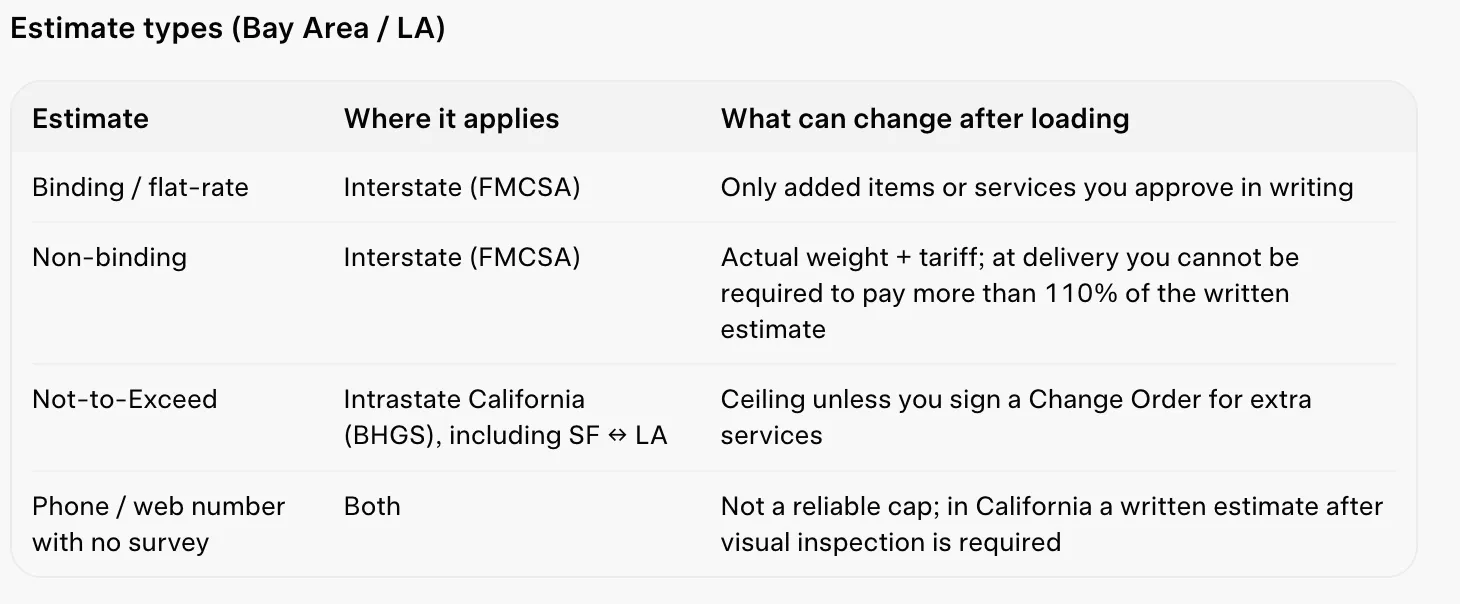
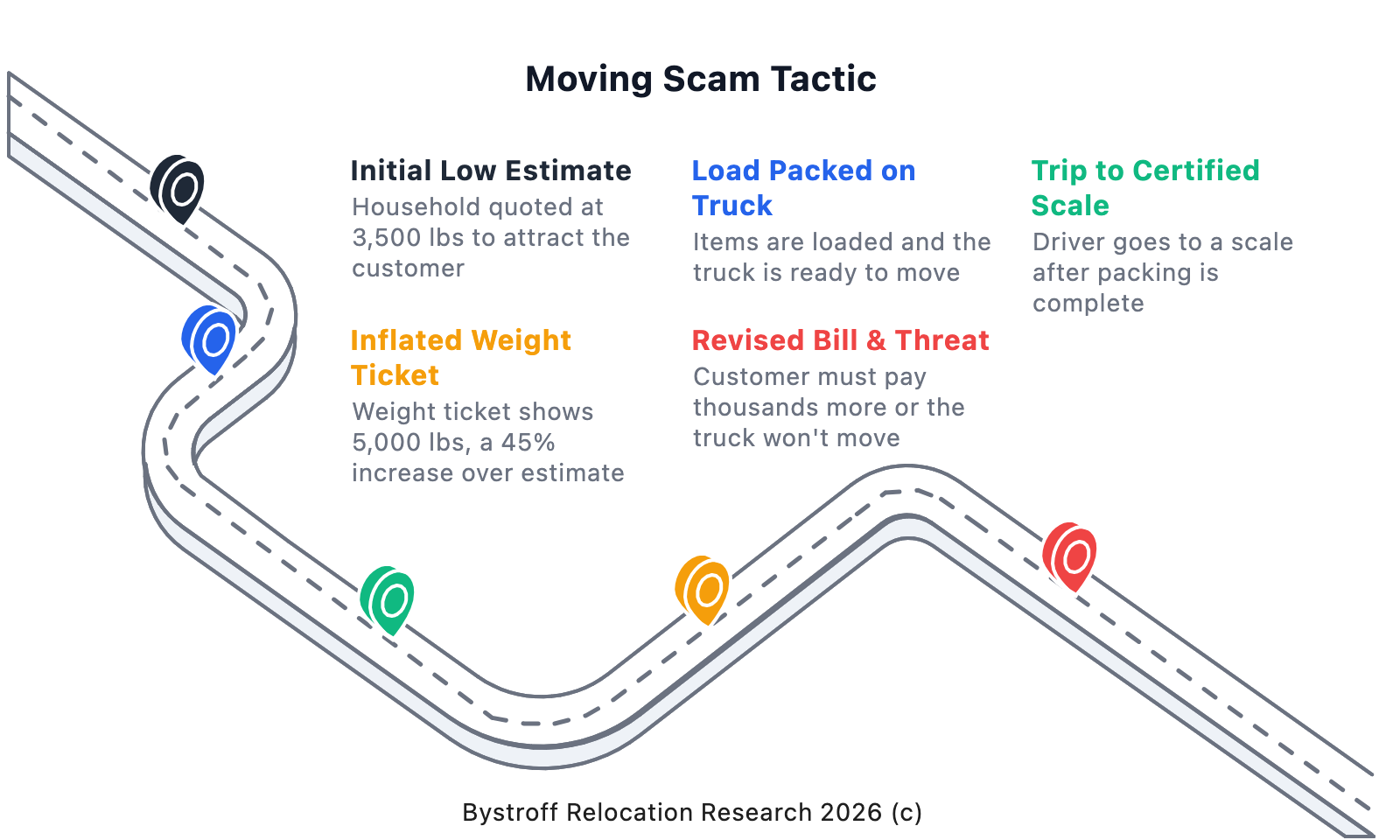
Many long-distance and full-service movers in California price the first quote off estimated weight or volume, not a locked inventory. A furnished 3-bedroom apartment of about 1,500–2,000 square feet — common in San Francisco, San Mateo, San Jose, or LA’s Westside — typically lands in the 4,500–9,000 lb range. The lowball is to quote that same home as if it were a 1-bedroom load, around 2,000–3,500 lbs, so the number looks competitive. The gap is corrected later, usually after a walkthrough is skipped or after the truck is already loaded.
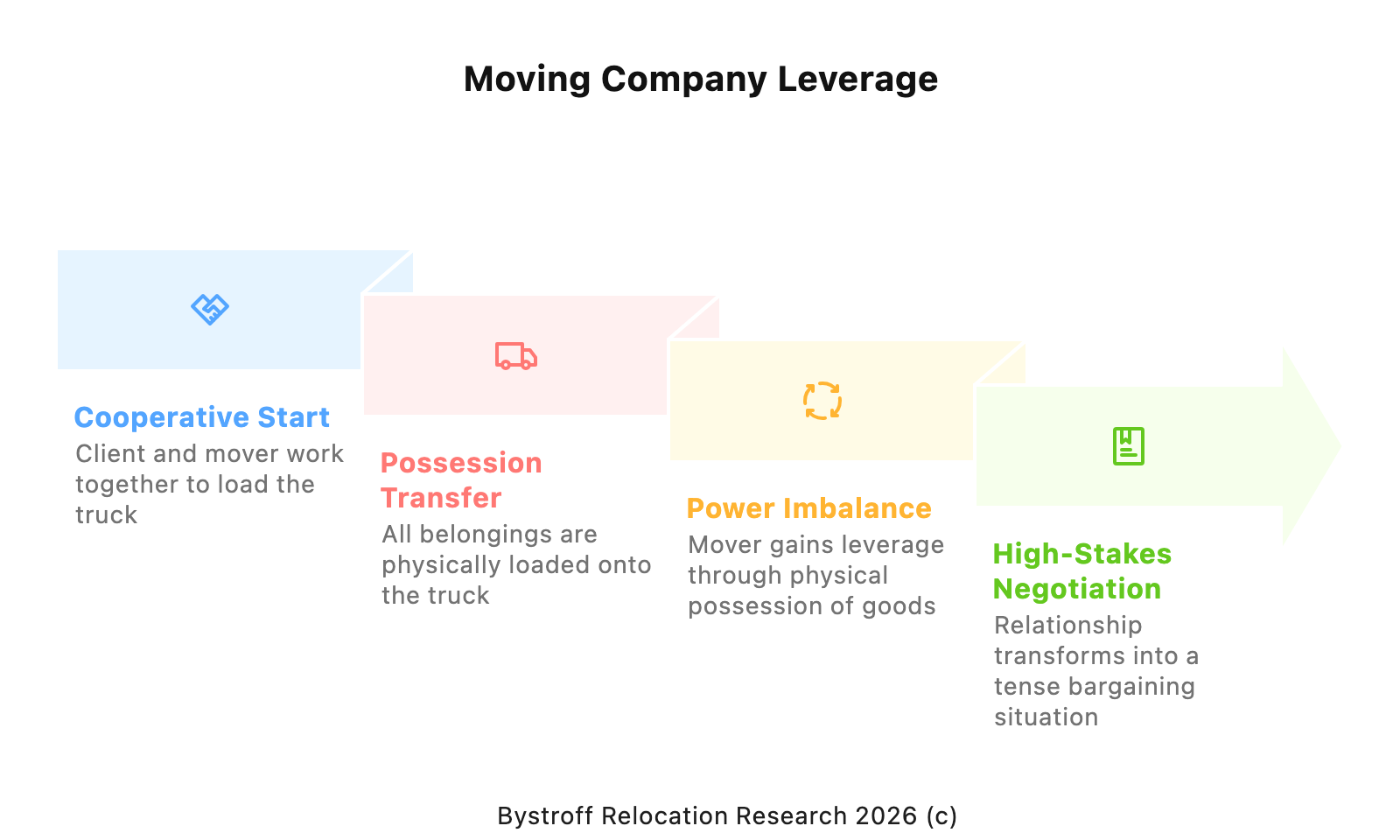
Once the truck is loaded, the mover holds the goods and the leverage. On a non-binding, weight-based quote built on a 1-bedroom weight (about 2,000–3,500 lbs) for a 3-bedroom home (typically 4,500–12,000 lbs), a certified scale ticket can jump the line-haul by thousands. After loading, a binding or California Not-to-Exceed price cannot be rewritten unless you added items or services in writing.
Deceptive companies also drag out the clock. On large packing/moving days a crew can run 10–12 hours. A day that stretches toward 15 hours with no written hourly cap is a pressure point: tired clients sign change orders they would have rejected in the morning. Ask whether labor is included in the flat rate or billed by the hour after a set window.
Insist on a written ceiling after a video or in-person inventory: a binding flat-rate on interstate moves, or a California Not-to-Exceed on SF ↔ LA and other in-state routes. Without that ceiling, the company can still claim the shipment was heavier than estimated or that the crew ran long.
A common red flag among Bay Area and LA moving companies is the sudden appearance of unquoted line items on the final bill. A true "white-glove" service should bundle standard packing materials — tape, industrial shrink wrap, heavy moving blankets - into the upfront fee as @packaging-fee.
Instead, materials that were never listed show up on moving day, and some invoices add an undisclosed card convenience fee — sometimes stacked when the balance is split across several charges. Ask that any card fee be one percentage, written into the estimate.
Ask in writing: "Does this quote explicitly include all tape, blankets, and boxes used by the crew, or will those be billed dynamically on moving day?" Make sure any credit card convenience fee is stated as a single percentage upfront.
Some high-volume moving companies serving the SF Bay Area to LA corridor use one crew to wrap and load the truck, then subcontract transit and delivery to a completely different regional crew - without telling the client. This creates a total breakdown of accountability if items are lost or damaged, and forces a double-tipping situation to ensure safe unloading.
In worst-case scenarios, onsite managers add unauthorized workers to the crew mid-move and try to force the client to pay for the extra, unrequested labor.
Contractually verify that the team wrapping the furniture is the same team unloading the truck at the new home. Ask directly: "Do you use subcontractors or a separate delivery crew for this route?"
A company's internal labor disputes, low wages, or thin margins should never become the customer's problem. Legitimate, high-end moving operations in California maintain strict codes of conduct that forbid crews from soliciting or pressuring clients about tips. A crew leader who guilts a client over voluntary gratuity is a sign of a poorly managed organization.
The ultimate defense against moving discrepancies in the Bay Area or Los Angeles is meticulous documentation:
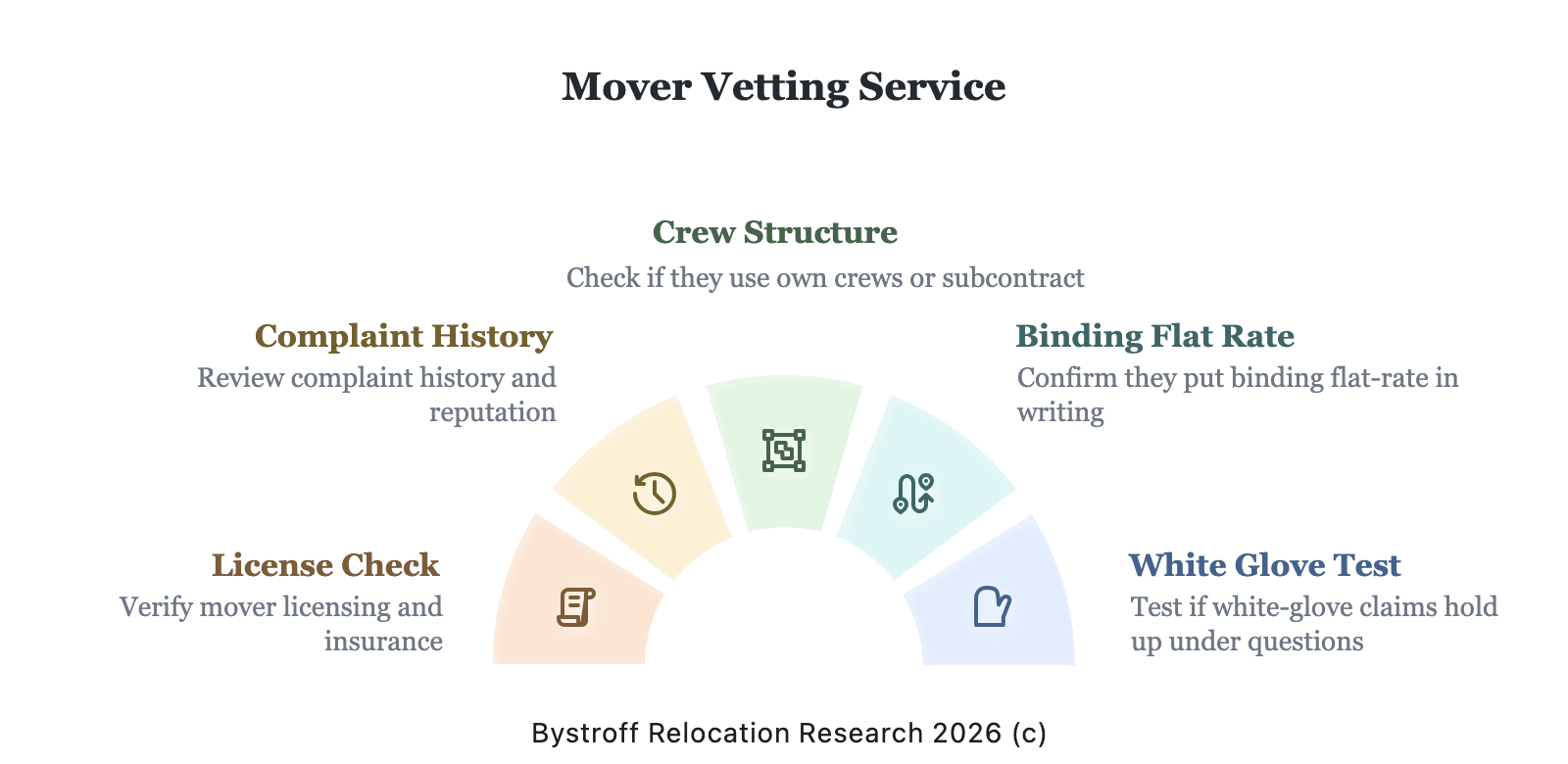
Do not treat “white-glove” as a price lock. Read the estimate type: binding, non-binding, or California Not-to-Exceed. If the company will not put a ceiling in writing after seeing the inventory, the label on the homepage does not matter. A smooth move depends entirely on upfront transparency.
Full-service packing, custom protection for furniture and fragile items, and placement at destination. The term does not, by itself, make the price binding.
Common causes: the original weight was below a normal 3-bedroom range, materials were excluded, extra labor was added, or the estimate was non-binding. Check whether you signed a binding, non-binding, or California Not-to-Exceed agreement.
No. Origin and destination are both in California, so BHGS household-mover rules apply, including a Not-to-Exceed price.
Inventory-based ceiling (binding or Not-to-Exceed), what packing materials are included, whether a second crew or carrier will deliver, how card fees are billed, and how overtime is handled.
Ph. Sulav Jung Hamal

We are ready to assist with your plan to move any volume and complexity. Check out online long distance moving quotes

All transportation is coordinated through licensed and properly insured carrier partners

Transparent price formation with absolutely no hidden charges. Guaranteed binding estimate
.svg)
Our staff is experienced, trained, and background checked. We follow safety practices and moving industry guidelines

All employees have pre-screened and regular monitoring. We follow CDC's guidance and recommendations

We are committed to eco-friendly practices in the moving process and use recycled packaging materials to retain the finest quality of our services

We manage complex relocations across the U.S., with projects starting or ending in California, New York, and beyond. Explore a selection of our routes and past projects.

Let us estimate your moving project! We're glad to provide the most accurate quote with a not-to-exceed price. Book a Video appointment now.


